
Dispatch XL

Continent #2: Europe
As the heat rose, the Camino shifted from quiet reflection to sheer endurance.
Every kilometer demanded more, yet offered something in return.
Part III
Encounters and Challenges on the Road to Padrón
“Every Conversation a Companion, Every Step the Humor That Kept Us Moving”
Camino Portuguese Days Three and Four —July 7 & 8, 2022 - Pontevedra to Padrón
Sweltering Heat and Fascinating Fellow Travelers
We’re deep into the Portuguese Camino now, heading north through farmland, forests, and small villages as temperatures climb into the 90s. This dispatch follows our trek from Pontevedra to Caldas de Reis and onward to Padrón, with the heat, the terrain, and the people shaping each step of the route.
“If you’re just starting out, here’s what to expect from the Camino de Santiago - Read Part I.”
Departing Pontevedra on the Camino Way bound for Caldas De Reis
Early Morning Walk out of Pontevedra
July 7 - 9:04 am - Sunny, Temp heading to 91º
Day three. Cyn and I departed the bustling town of Pontevedra; not a cloud to be found in the turquoise sky, and temperatures heading to 90+º. According to the news, a second Spanish heatwave was on its way. We thought we had escaped the three digit temperatures of Morocco earlier in the summer, but the heat seemed to be following us.
It took 45 minutes to clear the other end of the town before we began rising into small family farms with rows of summer corn, red tomatoes and tiny vineyards. No agribusiness here, just farm-to-family sorts of operations. The walk was pleasant for now and the Compede we had applied to our fiery feet was relieving the pain. A light breeze sometimes whipped itself into a stiff wind which we gratefully embraced. Shade and any breeze was always prized. We made good time, but resolved to stop every 2 miles and give our barking dogs a break.

Making our way out of Pontreveda. (Photo - Chip Walter)
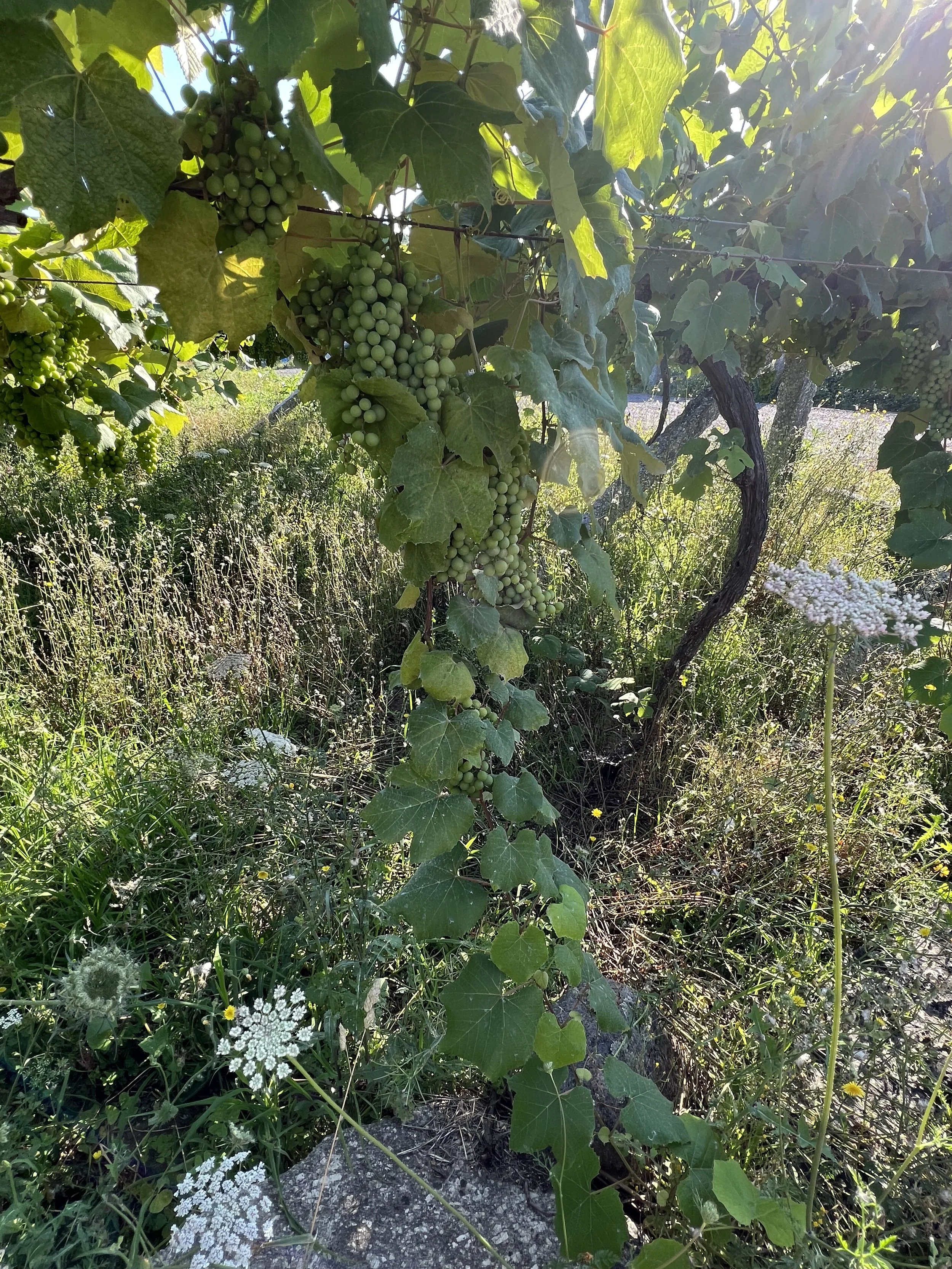
Spanish vineyards and tiny farms. (Photo - Chip Walter)
Into mid-morning we noticed that the small vineyards on The Way were strung together across stone rather than wooden posts. They must have been around for decades or maybe centuries, built to last, unmoved and unmoving as year after year fresh grapes made fresh wines consumed by a fresh generation of drinkers. The stones were reminders that "progress" is a relatively new idea for the human race. Until the late 18th century and the rise of the industrial revolution most of life was cyclical. The seasons returned, the crops and vineyards did their work, harvests followed one season upon another, and the great circle of life wheeled back around to its starting point each time. Age was the only indicator that anything truly changed. Wandering this part of Spain felt like another time. And then a high-speed RENFE train shot through the quiet, ancient landscape as if from another dimension and I was reminded that places like the vineyards were among the last shreds of time remaining in a rapidly changing world.
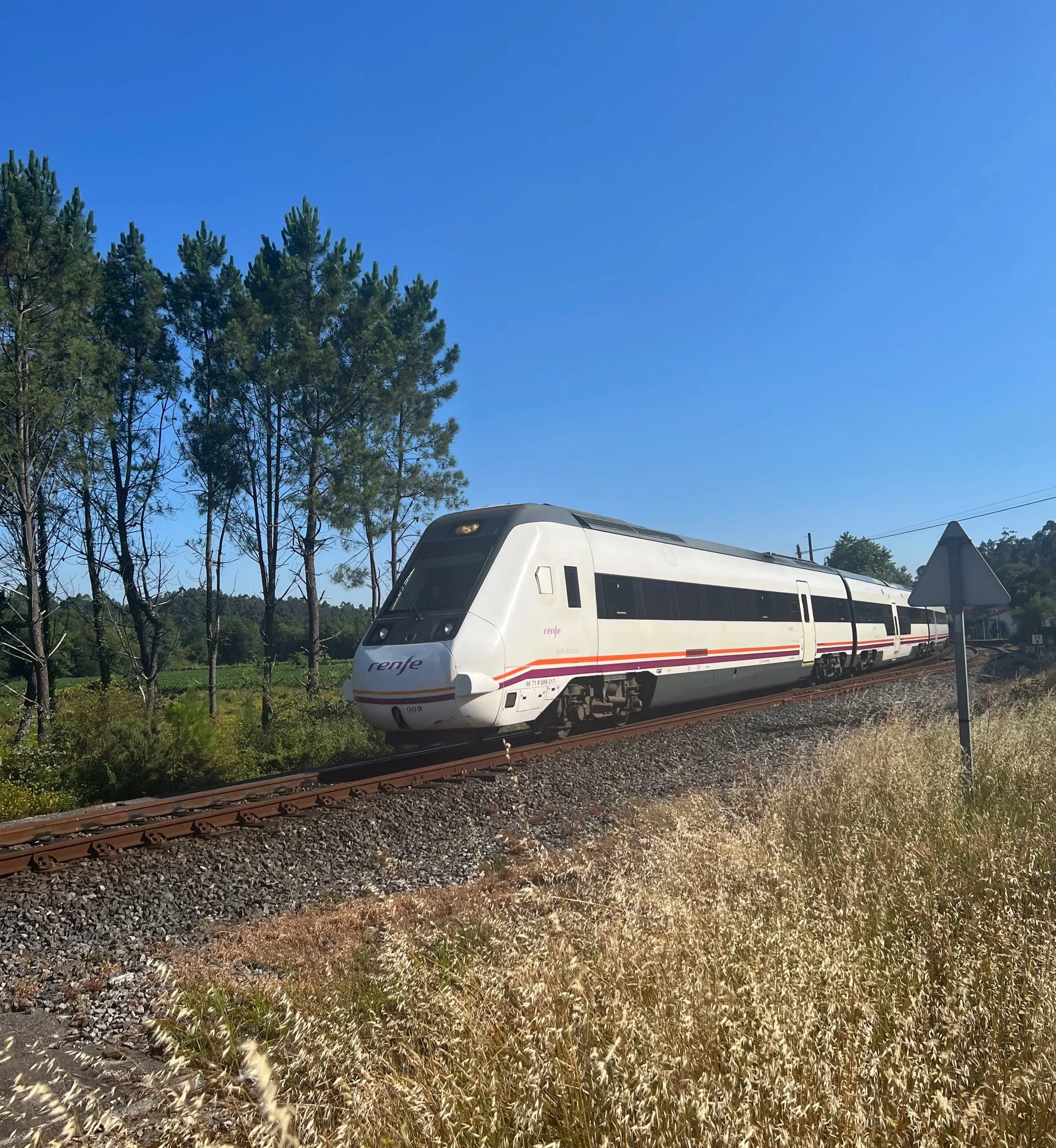
Past meets present. (Photo - Chip Walter)
Pausing for Blisters
After a few hours, even with our agreed upon breaks, our blisters began to take themselves to new heights of pain. On day two Cyndy had developed her first blister—this one on her heel. One bad blister was all you needed to get your mind focused on nothing but the suffering it generates. The blister on my right foot had grown an evil twin and I knew I had to do something or be crippled. And now my left foot was threatening a new, blazing assault there as well.
We stopped along the path to take a break, and ate an apple in the shade with two young ladies who were also walking The Way. They were olive skinned and growing darker by the day. Their teeth against their tans was brilliant. A heavy, black braid ran down the side of one woman’s hair. Her companion carried hers in a ponytail. We had seen them before along the Way so I asked why they were making the trek.
They looked quizzical and then one said, "To take time off and spend time together." They were from Valencia. Their plan was to get to Caldas De Reis today, then Padrón and then on to Santiago where they would rest for two days. After that, home, but not until they made one last stop at Cabo (Cape) Finisterre — very close to the Latin word for “the end of earth” because at one time pilgrims did in fact consider the cliff-hung place the end of the world. They seemed so blithe and happy I asked how they were avoiding blisters because clearly they had none. Some people had told us to wear only sandals. Too late for that. These ladies said they rubbed Vaseline on their feet and then put their socks over top. We said we’d give a try that night … if our feet made it to evening.
Back up and on the road, we watched the beach trees do their great arcing dances in the wind until we passed into pine forest and thick pastures of ferns clumped along creeks that came and went. Then more corn and vineyards. Blisters or no, we were now walking a steady pace that put me in a meditative state where I felt as though my walking body was one person and my mental one another. I thought of nothing in particular but simply watched what I saw, neither commenting on it nor being reminded of anything else. Just the walking and the quiet passage of time and place. It felt good.
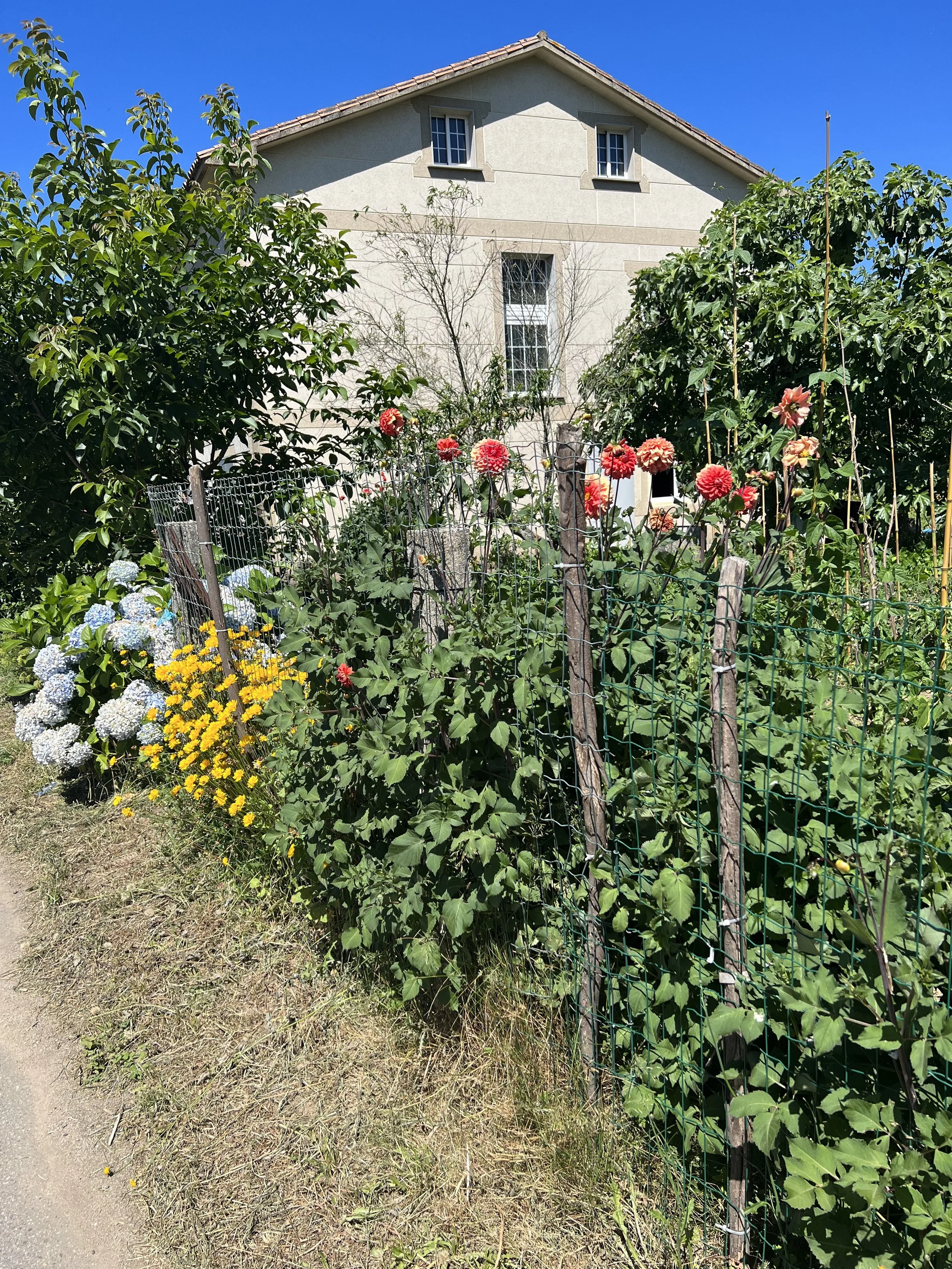
More beautiful countryside (and more blisters). (Photo - Chip Walter)
Camino Encounters - Conversations on the Trail
At about 6 miles into the day we stopped for some water at a little outdoor taverna with tables, chairs and umbrellas the colors of lollipops. A young couple sat in the shade having a soda and some water. He was dark-haired and square jawed. She was nordic with flaxen hair, very pretty.
The dark-hair man smiled and gestured to the chairs, his arms wide, “The seats are very comfortable,” he said. “Come!” We sat.
This was Liesanne and Carlos from the Netherlands, two medical students 25-years-old soon working through the American equivalent of their residency. They were on the Camino Way to spend some time together and prepare for the next level of their medical education. Soon they would both be doctors but for now they wanted to take some time away from the rest of the world and reflect a bit. They had been contemplating how difficult it was to accept that there are somethings in life you can’t control. “There’s a circle,” said Carlos, “that we all should draw. Whatever is in that circle, you can control, whatever is outside of it, you cannot … and those things you must let go.”
Cyn and I agreed this made enormously good sense. What else could you control but your own small slip of the world. We all worry, but no matter how much we do it, it accomplishes nothing. In fact worry is the definition of the things we gnaw and chew on in our lives that are beyond our power. It might be the current red light you wish would turn green, or the shiny object we can’t afford, the jerk at work, children dying in Ethiopia, microplastics heading into the food chain, good people dying of cancer. None of it was fair, but none of it could be controlled. Yet we worry and stress, and it gets us nowhere. I knew I wasn’t the only person who struggled with these dilemmas but surely there must be something we can do about it all. And maybe there are small things, but would we really move the big giant levers of the world with our lilliputian efforts? All we could do was control the things over which we had some power, small as they may be. And even then there is a corollary. I mentioned it to Carlos and Liesanne, “Sometimes the hard part is knowing for certain what goes in which circle. What is inside, what is out?” That was the sticky part of the Venn diagram.
Reflections on the Modern Camino
Philosophical insight seemed to be the thing along the Camino Way. The vaseline-footed women from Valencia had felt the same as Liesanne and Carlos. Maybe The Way was once a pilgrimage for paying homage to God, or the church, Saint James, or for penance and forgiveness, but now it seemed that mostly people saw it as a time to spend with friends, to be released from the stress of daily life. These days walking to St. James seemed more about reflection in a world where time to reflect was in short supply, a time, at last, to thoughtfully wonder why we get up every morning and do the things we do. And occasionally it was simply about untethering your mind. “Sometimes it's just nice to follow the shell and yellow arrow (the symbols posted along the Camino Way) and not worry too much about where you’ll go next,” said Liesanne.
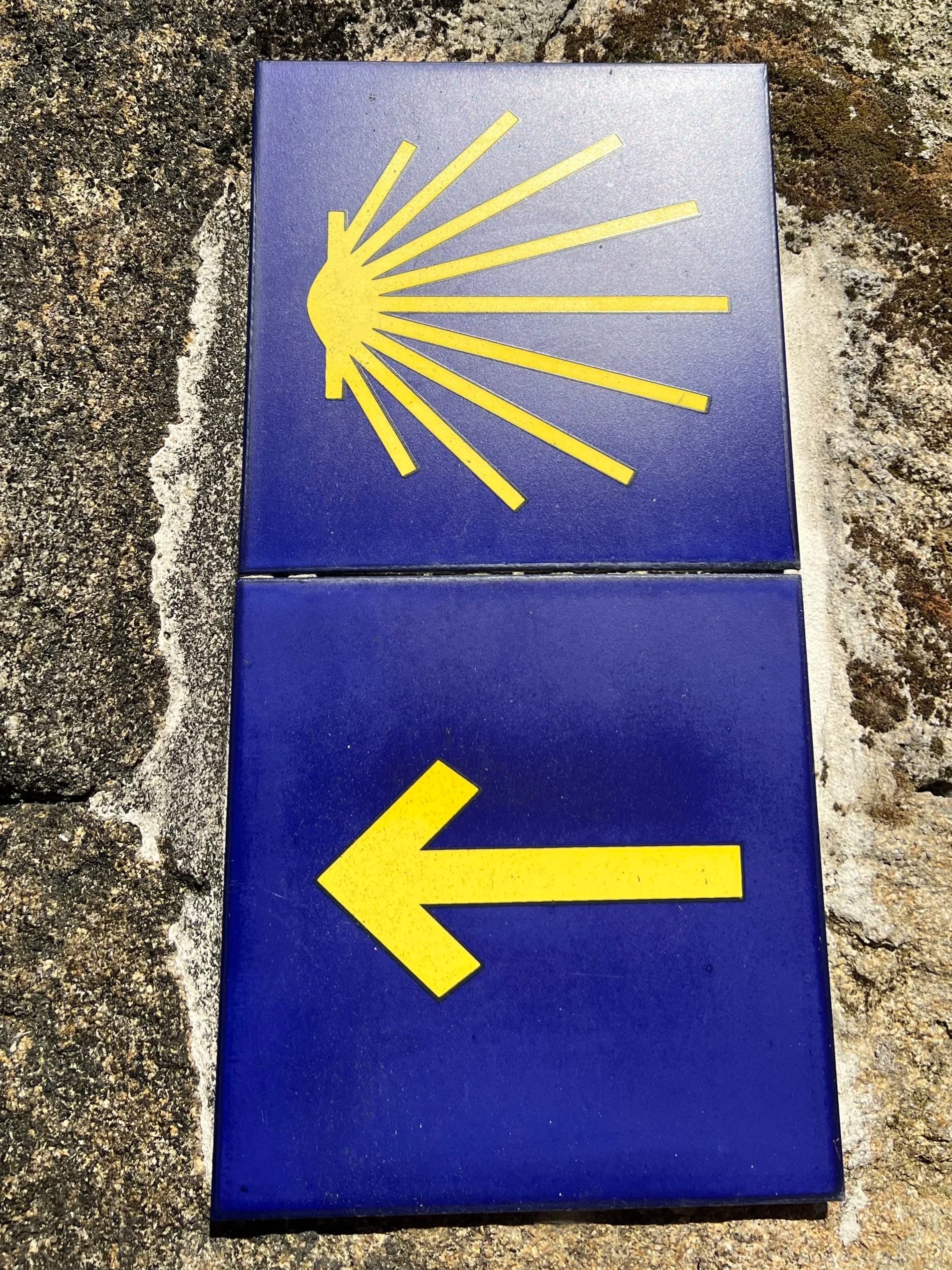
Symbols of the Way. (Photo - Chip Walter)
We lingered a little longer and then, their drinks finished, they returned to the path. Carlos insisted that I take one of his canes to help my sprained ankle. He still had another for his sore knee he said. I thanked him and they were off.
We returned to the path too, rising into the hills of a tiny village that gave us a breathtaking view of the valley. There were more small farms and vineyards and an old woman pushing a wheelbarrow overflowing with weeds she had pulled from her garden of tomatoes, eggplant and broccoli. We descended into the forest and along a ridge that followed a creek bed. Four hours and 7 miles of walking brought more heat. It was nearly 90º. We plodded on.
I had by now lost the day’s earlier meditative state but remained philosophical. Two words repeatedly arose in my mind: wonder and wander — just me mumbling to myself. Literary bedfellows I thought. Nothing more than a single letter differentiates the two. “Opposite sides of the same coin?” Wondering leads to wandering and vice-versa. Here we were wandering these pathways in the woods of Spain while wondering about the land through which we were walking and the pilgrims that had trod here by the hundreds of thousands over the centuries — saints and sinners, kings, popes and movie stars; Petrarch and Pope John Paul II, Charlemagne, Shirley MacLaine and Martin Sheen; even an occasional lowly writer like me trying to somehow capture this time and place and ponder the elusive meaning of it all.
I wondered not only about these wanderers, but considered where the lives of people like Carlos and Liesanne and the ladies from Valencia, Father LaSana and his brood from the Philippines and the new people we would soon meet would take them. Cyn and I gazed at our feet and watched them pull us forward. Everything was a journey really, and The Way was a metaphor for life: each of us on our own path, each unwinding a unique story, but all of us making a journey.
In time, step by step, our battered feet took us north until once again the movement acted as a metronome, a mantra that calmed and steadied us even in the heat and pain.
Overnight in Caldes de Reis
Our contemplation held true until we made it to the little town of Caldes de Reis, our destination for the evening. Cyndy had located an AirBnb there. Earlier in the day, the owners had sent Cyndy a mysterious text:
“Hi Cyndy, you have a reservation (15890-25082) at Oktheway Barro 2 (wherever that was).
This is the panel of your reservation: https://booking.oktheway.com/b17.asp?bt=9a849b07hh31375f20220706145510hh8211aaaecdh70c345 from which you can check in online, pay, order transfers, see recommendations, etc.
Please access the panel, check in online as far in advance as possible.The instructions for accessing your apartamento will be shown once you have completed check in and pending paymentsThank you very much.”
This was a long way from a nice little Spanish grandma showing us into the apartment she had arranged for us — the image I had somehow conjured in my head when we were to arrive in the town. But the text looked simple enough and we figured there would be no problems. In this we were very wrong.
We stood in a small street in the village near where we thought the apartment was located and re-opened the text, but we could not locate the exact apartment number because neither streets nor buildings were clearly marked. I took a guess and we texted for instructions to get in, except cell signals were tough to come by. After wandering up and down the faceless buildings I finally found a weak signal that got me inside the building. There I was texted instructions that I should use a password to open the apartment door. But that required opening a website and the signal was so weak it couldn’t handle that. I tried calling the phone number and finally got a man on the phone who had all the charm of a cobra. He gave me a password, but the door refused to unlock. He became frustrated with me because the password wasn’t working and soon my voice was rising with his. He kept insisting I use the password and I kept insisting that it wouldn’t work. The mismatch of English vs Spanish probably didn’t help. Finally I said, “Please just open the *&%$ door! You can do that with one keystroke.” At last he relented and we stumbled into the apartmento utterly exhausted and flushed with frustration.
By now we were dehydrated, hot and hungry. We unloaded our daypack. The Airbnb was immense with three full bedrooms, a bathroom, kitchen, laundry and living room, but almost no dishes or towels, which come in handy when you want to eat or take a shower. Since we noticed a washing machine and drier (very modern) in the kitchen, we decided to get our filthy clothes cleaned while we figured out the food situation. Yet another bad move because once the clothes went into the laundry, the machine would not stop, nor would it open. It simply churned our clothing cycle after cycle while we tried everything to unhinge the laundry door.
Now we were really in a pickle because for these six days on the Camino Way, Cyn and I were only carrying enough clothes to fit in one small daypack. Once we put the clothing in the machine, very little was left to put on us! So there we were with a bundle of wet and unavailable clothing, half naked and no way to open the damned machine! Which circle of the Venn diagram did this fall into, I wondered? We had no power to open the thing, but simply doing nothing wasn’t going to cough up our clothes!
Inside the AirBnb we had wifi service so I called the number again and got more surly and useless advice.
“Open the door,” the man said.
Me, through gritted teeth, “If that worked would I be calling you?”
I explained that we needed a solution now because we wanted to eat.
“Restaurants are nearby,” said the useless man.
“Our clothes are in the washing machine and I am naked,” I said. “Going to a restaurant is not an option!”
Finally, after more frazzled exchanges, we were told someone would come to help. Meanwhile, Cyndy had searched the Internet to find that this particular washing machine/drier combo had an issue and the trick was to unplug the machine from the power outlet. I immediately disconnected the contraption, but still no door opened. So we waited for the help that was promised.
I could see Cyn was fried and I wasn’t far behind. The blisters, the heat, the technological frustrations, dehydration, lack of food. It can make a human cranky.
Cyn laid on the bed at one point gazing at her blistered feet and said, “I’m done.”
“Really?” I said. “You don’t want to make it all the way to Santiago?”
“Done,” she said. I didn’t push it.
I walked back to the recalcitrant washer/drier and gazed at it some more, this malevolent thing that had taken control of our day. I gave it one more heave and lo! the door opened! I heard a choir of angels singing, and quickly put the clothes in the drier. Soon we had enough to wear that I could get to a local market. All stories, all of life, is comprised of ups and downs. This, at last, was an up! I bought some beans, eggs and fresh vegetables and a bag of popcorn and juice.
Back at the AirBnb, I made some sort of stir fry with everything from the market and unearthed some of the spices in the kitchen. I fed the concoction to Cyn from one of the two bowls the proprietors deigned to provide us and filled my belly with the rest. We felt better. By this time it was dark and the day had us by the tail, but at least we were showered, our clothes were clean (very clean), and we had some food under our belts.
“What time do you want to leave in the morning?” Cyn asked.
I smiled. She wasn’t giving up. “Around 9 am?” I suggested.
“Okay.”
Fifteen minutes later, we were well asleep.
Caldes de Reis to Padrón
Morning Departure from Caldes de Reis
July 8, Day 4 - 72° at sunrise rising to 96º.
I have little memory and fewer notes about exactly what we did the next morning except that I know we walked out of the tiny town and were soon again on a path surrounded by trees and farms. We hadn’t gotten very far when we ran into Ewa and her 17 year-old son who had just graduated high school.
I had assumed that Ewa was Spanish because she looked so Mediterranean and we were, after all, walking through Spain, but I was wrong. She was Bulgarian, a fit and solid woman in her late 40s, perhaps a bit older. She spoke excellent English so the conversation flowed easily.
She said she was walking the Camino Way to spend time with her son just as she had with her two previous daughters when they graduated high school.
“It gives us time to talk and be together before he leaves for college, even if he is listening to music on his phone half of the time.” She smiled and pointed at him down the road with his headset clamped on. They would walk to Santiago to pay a visit to St. James and then continue on to Finisterre, as the Valencia women were, and then to home.
Ewa was a thoughtful, smart woman filled with opinions about her own country. She was a consultant to large companies and organizations throughout Europe, a kind of high level fixer I gathered and she elaborated on Vladimir Putin, Ukraine, world economics and European politics.
“It’s a beautiful world,” she said, “But troubled. People need to be more open,” she told me. “People are good so why do we separate ourselves from one another? Why do we turn on one another? Have we forgotten about World War II, grown lazy and so we think we can do better and pull away into these little enclaves?”
She was talking about countries that keep Balkanizing one another, breaking themselves into smaller and smaller pieces rather than banding together. Spain, Britain, Morocco.
There were a lot of older Bulgarians who longed for the old Soviet system where the government may not have provided you much but at least it was free and required very little responsibility. “They want to go back to the old ways,” she said. (We would hear this many times during our later travels throughout Europe.) “They aren’t fans of Vladimir Putin, but they blame every problem they have on the EU (European Union)—inflation, higher gas prices, housing. And they fall in love with the good old days of Russia’s great writers and composers.” I thought of that long and impressive list — Dostoevsky, Mussorgsky, Tolstoy, Chekov, Tchaikovsky. They were undoubtedly monumental talents but hardly the result of the Soviet system.
“They forget what it was like before the EU,” said Ewa, “when it was really bad and choices were nearly non-existent.”
“Would Bulgaria ever want to pull out of the EU,” I asked. “Is there enough support to go with Russia?”
“Oh, no! Never!” She said, “They will stay with the EU, but just keep on complaining. We should have taken longer to get Bulgaria into the EU,” she said. “It happened too fast (Bulgaria joined the EU in 2007), and the people don’t understand how a democracy really works.”
Nevertheless, she loved the country. She grew up and lived in Sofia, Bulgaria’s capital and largest city. “There’s so much history. And so much Bulgarian culture that people are unaware of. And the country is beautiful. For a Balkan country, it’s big, but only 7 million people and by 2030 that will have dropped to five million. “If you want to live in a place where there's lots of room and not many people, Bulgaria is your place," she said.
After a few hours, we parted ways with Ewa. Not because we weren’t enjoying the conversation, but because I finally had to relieve some pressure on my blistered right foot. I had reached my limit. We sat down, I took out my knife and cut my shoe open turning it into something more like a sandal. It was sweet, sweet joy. From there I was able to walk the remaining two miles to Padrón and in less pain than I had felt for days.
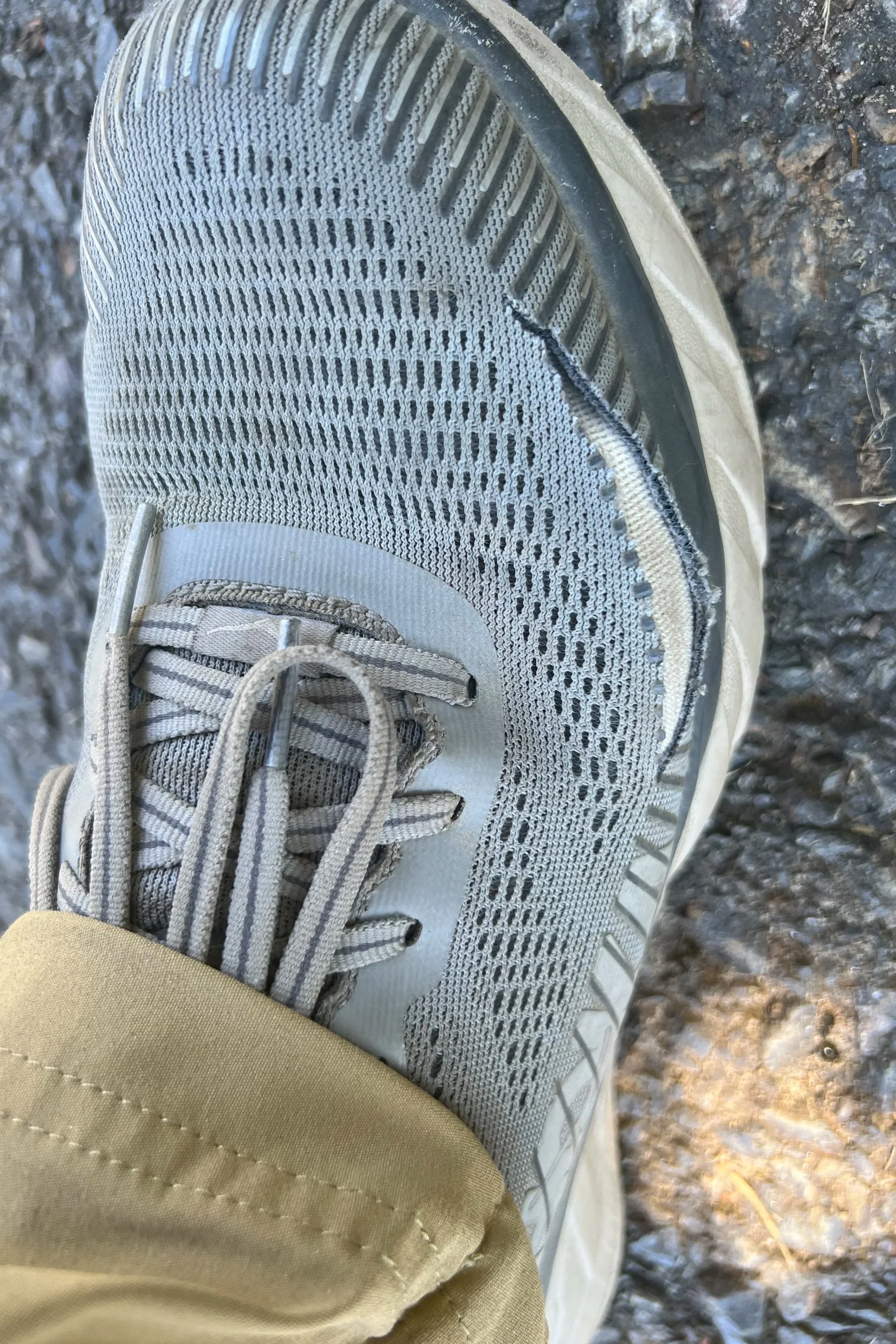
I took out my knife and cut the right side of the shoe wide open. Sweet relief!! (Photo - Chip Walter)
Arriving in Padrón
The remainder of the day, the heat continued, but the views at least were pleasant until we hit the outskirts of Padrón where we were forced onto a major highway and could find no grass or dirt path to get us to our next hotel, the Rivera. So on we walked in the heat. Cyn and I kept our heads down fighting, convinced the best solution was to just power through and get to the hotel. During the day, even along the treed pathways the thermometer had hit 90° and then 95°. When we hit the highway we were on a stretch where shade was nonexistent. The hot pavement didn’t help. We were getting flattened.
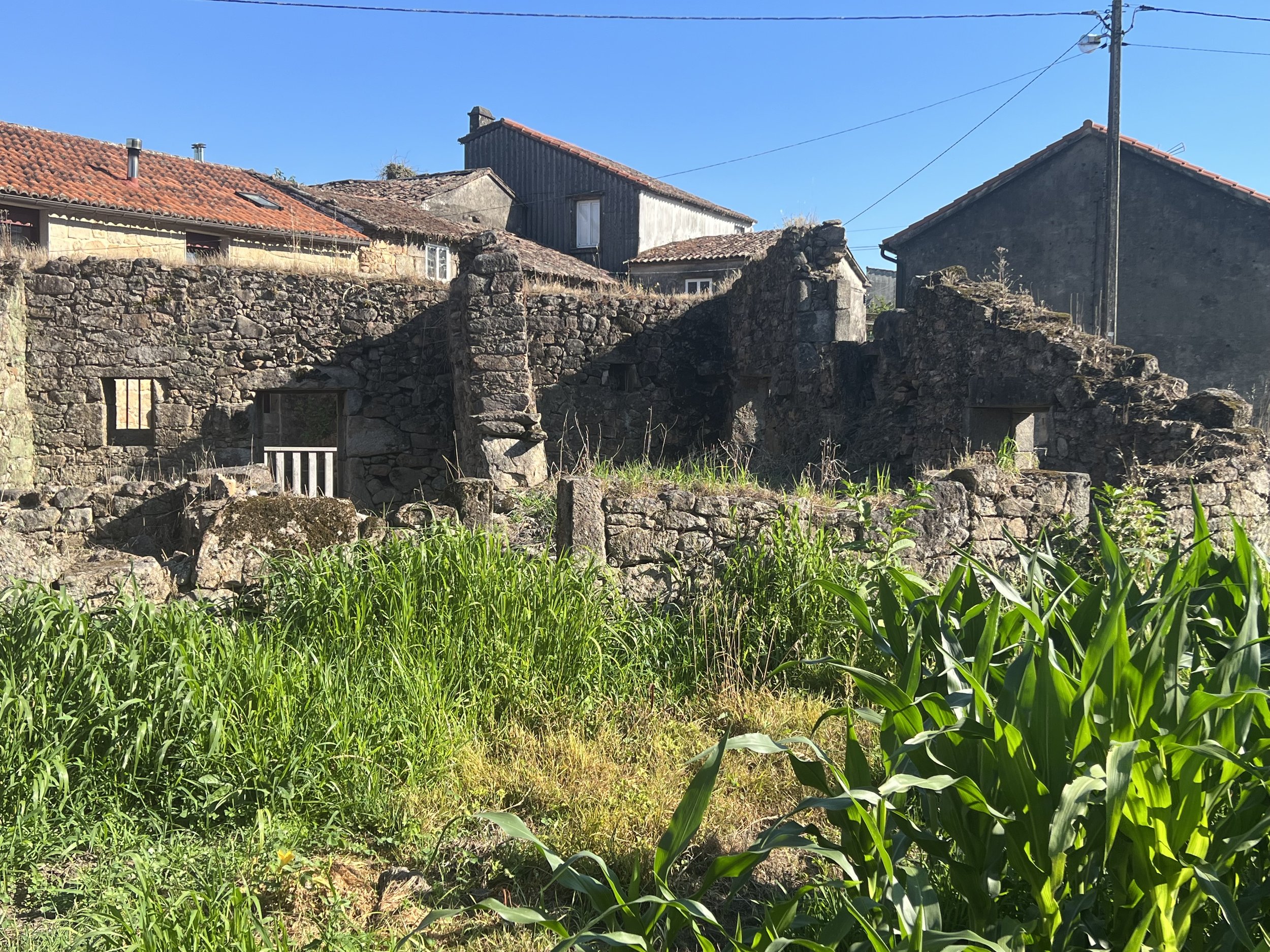
At least the views were pleasant, until we hit the highway… (Photo - Chip Walter)
Our shirts soaked in sweat and dragging like bedraggled marathoners, we finally made it to the hotel - 9 miles. I remember sitting down in the little restaurante and watching the running of the bulls in Pamplona on TV: Trounced humans, curled in balls, the hospitals dealing with the human carnage in slow motion. I tried to remember why this was supposed to be so fun. And then I wondered if what we were doing wasn’t just as crazy.
I was too tired to think about it.
My only other memory of the evening is that the Rivera’s food was spectacular and the wine seemed to be the best we had ever put to our tongues. Might have had something to do with the day we had. We could have been eating shoe leather and drinking turpentine. But at least now we had another day behind us, were showered, hydrated, and had applied fresh and copious pads of Compede to our feet. Two more days ahead. The TV told us temperatures the next few days would approach 100º Fahrenheit.
Unbearable heat to the end. Perfect timing.
Next up: the final two days ...
Quick Tips for Pontevedra → Padrón
Start early: Beat the heat by leaving at or near sunrise.
Gear check: Good socks, broken-in shoes, and trekking poles reduce strain. Sandals can be a practical alternative. Keep moleskin or Compede handy.
Watch the weather: Heat waves are common in summer—plan breaks and hydration accordingly.
Have a map handy: In a few spots, the yellow arrows and shells are hard to find.
FAQ
Q1: How long is the stretch of Camino Way between Pontevedra and Padrón?
A: The walk between Pontevedra and Padrón is 37.5 km (23.3 miles). Caldas de Reis is about midway between the two towns and makes for a natural stopping point 21.1 km (13.1 miles) from Pontevedra and 16.4 km (10.2 miles) from Padrón.
Q2: How much time should I allot between Pontevedra and Padrón?
A: Expect the walk to take 9 hours, with allowance for your own pace. Add time for meals, water breaks, and rests. Many walkers choose to break the journey with an overnight stop to avoid rushing the experience.
Q3: What challenges should I expect on the route between Pontevedra and Padrón?
A: Weather is the main variable. Coastal Galicia can be rainy any time of year though temperatures are usually mild. Consider carrying a map or GPS track. It can be easy to miss the trail markings along this segment of Camino Way. Physically, this segment of the route is not demanding. The elevation changes are not demanding.
Q4: What will I see along the way from Pontevedra to Padrón?
A: Expect small vineyards, family farms, and occasional signs of pre-industrial rural life. As you move closer to Santiago de Compostela, the path grows busier, with walkers from many countries. Most are friendly and open to conversation as a way to pass the miles.
Q5: Why do people walk this section of the Camino?
A: Motivations vary widely. Historically, pilgrims walked to honor Saint James and seek spiritual purification. Today, many still come for reflection, personal reset, or philosophical clarity. Others walk to spend time with family or friends, or simply to step away from a fast-moving world.
Q6: How can I treat or prevent blisters on the Camino?
A: Local pharmacies stock Compeed® blister pads, which work well for both prevention and treatment. Traditional moleskin is less common in Spain, so bring your own if you prefer it. Good socks, breathable footwear, regular breaks, and cooling feet in streams all help. Some walkers use sandals instead of closed-toe shoes, especially in hot weather.
We’ll pick up the Camino story from Padrón in an upcoming dispatch.
About the Author

Chip Walter is an author, journalist, filmmaker, and former CNN bureau chief whose work explores the crossroads of science, technology, and human possibility. His popular science books have been published in eight languages, while his fiction blends cutting-edge ideas with propulsive storytelling. Doppelgänger: An Orphan, a Prodigy, a Murder brings together decades of research into neuroscience, AI, and the nature of identity.
He travels the world with his wife, gathering the stories, ideas, and experience that fuel his writing.
This is Dispatch XL in a series about a Vagabond’s Adventures - journalist and National Geographic Explorer Chip Walter and his wife Cyndy’s effort to capture their experience exploring all seven continents, all seven seas and 50+ countries, never traveling by jet.
If you’ve enjoyed this dispatch, please take a look at Chip’s other adventures (and misadventures) … and don’t forget to check the Vagabond Journal and our Travel Recommendations to help you plan YOUR next adventure.
Sign up here to get our newsletters delivered to your email along with a free copy of Chip’s award-winning book Last Ape Standing, news and special offers in the Vagabond Adventure Store.